How to flirt over text without being cringe
Flirting over text is a calibration game: match their energy, go one notch warmer, and back off cleanly if it isn't returned. Scripts inside.
LustAI Editorial7 min read
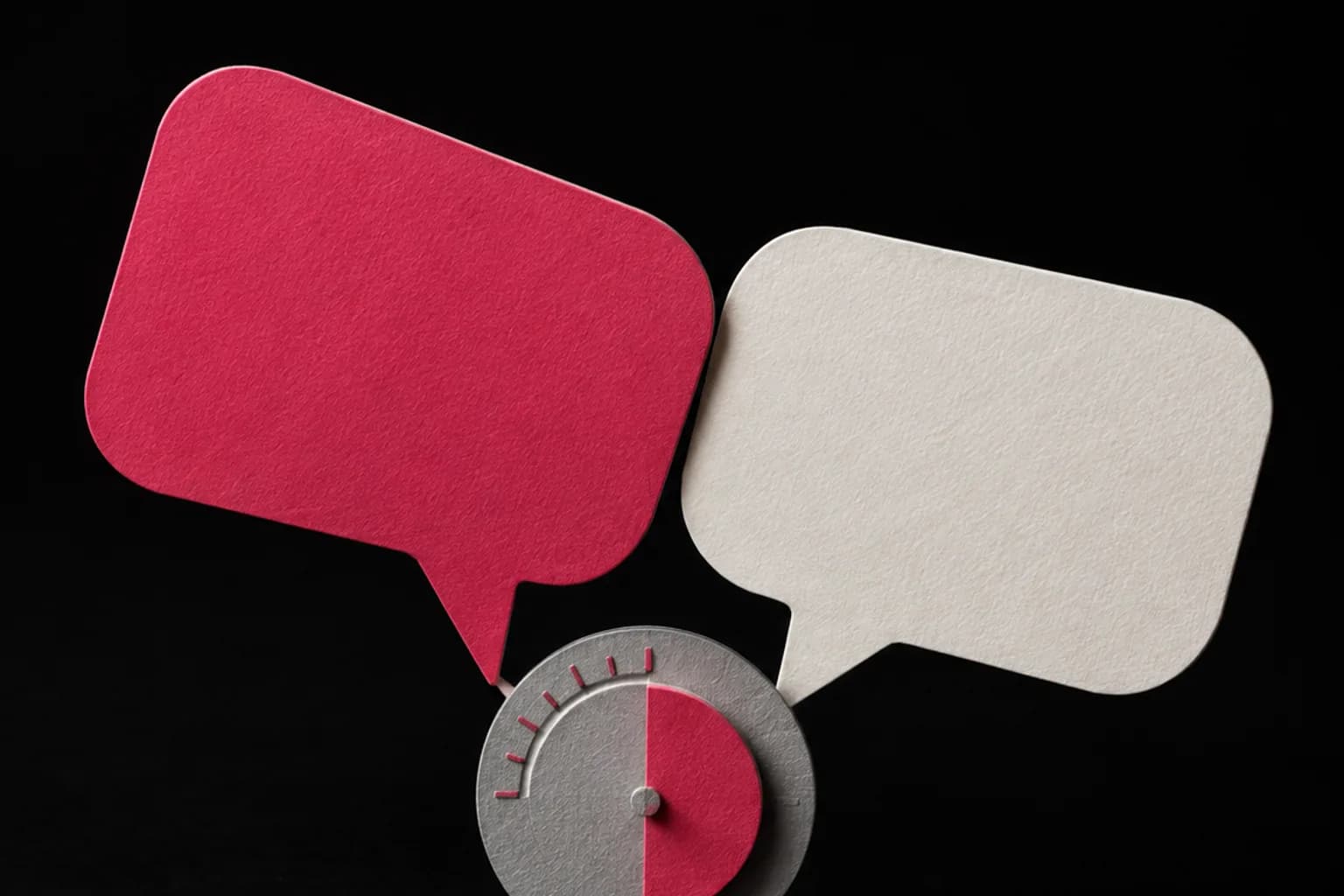
Good flirting over text is mostly calibration. You send a little warmth, watch what comes back, and adjust. Lines and "moves" fail because they skip the watching part. What follows is a way to flirt that feels good on both ends and leaves everyone with their dignity if the answer turns out to be "no thanks".
What does flirting over text actually look like?
Flirting is just conversation with a little extra warmth and a little extra play. In text, that warmth shows up as attention (you noticed a detail), lightness (you made something small into a shared joke), and a hint of "I like talking to you". Nothing more is required.
Researchers who study this describe several distinct styles rather than one correct way. Jeffrey Hall's work at the University of Kansas, summarised in a KU news release on the five flirting styles, found that people tend toward playful, sincere, polite, traditional or physical styles. Over text, the sincere and playful styles do almost all the work, because they run on words: real questions, real reactions, small jokes. That is good news if you are not a natural performer. You do not have to be.
"Cringe", by the way, is slang for the hot second-hand embarrassment you feel when someone tries too hard. Text flirting turns cringe when the warmth in a message is far ahead of the warmth in the reply it answers. So the fix is not better lines. It is closer reading.
How do you flirt without being obvious?
Use the one-notch rule. Read the last message you received and decide how warm it is: neutral, friendly, or warm. Then reply exactly one notch warmer, never more. If they wrote "haha yeah that show is great", a one-notch reply is "okay, you have good taste, that's now on record". A three-notch reply is a paragraph about how rare it is to meet someone who gets you. The first invites a reply. The second asks them to catch up to feelings they have not had yet.
One notch is hard to see and easy to return, which is exactly the point. Flirting that is hard to spot is normal, not a sign you are doing it badly. In a study reported by KU News, people in face-to-face conversations correctly noticed when the other person was flirting only around a quarter of the time, and were much better at noticing when someone was not. If people miss it that often in person, with tone of voice and faces to help, they will miss it in text too. Subtle is fine. Subtle plus patient is the combination that works.
How do you flirt with a stranger you just met online?
Start colder than you think. With a stranger there is no shared history, so the first warmth has to be built from what they give you in the chat itself. That means the earliest moves are curiosity, not compliments. Ask something you actually want to know. A 2017 study in the Journal of Personality and Social Psychology found that people who ask more questions are liked more, and follow-up questions do the most work, because they prove you listened.
Here is what the first ten minutes might look like when it goes well. Notice that the warmth climbs one notch at a time, and that either person could be any gender.
A: ok important question, is it raining where you are too or is it just me being dramatic
B: not raining. very sunny. sorry
A: sorry?? you're gloating
B: slightly. I did also just spill coffee on my laptop so the universe is balancing it
A: oh no. is the laptop okay. is the coffee okay
B: the laptop lives. the coffee did not deserve this
A: honestly you've had a bigger morning than me and it's 9 a.m. what's the plan for the rest of it
B: apparently talking to you. and buying a keyboard
Nobody in that exchange said anything you would be embarrassed to show a friend. Yet by the end, B has volunteered that talking to A is part of the plan. That is what a returned notch looks like. If you want a closer look at reading those returns, see how to tell whether flirting is mutual.
How can you tell if you're flirting too much?
Run the three-message check. Scroll up and compare your last three messages with their last three. Look at length, warmth and speed. If yours win on all three, every time, you are ahead of them and it is time to ease off. Not stop, just ease: ask a plain question, react to something they said, let a beat pass.
Two things cause most over-flirting. The first is tone blindness. People believe their playful tone is obvious in writing far more often than readers actually pick it up; that is the finding of Kruger and Epley's "egocentrism over e-mail" studies. Your teasing message might be landing as plain criticism. The second is anxiety about silence. A gap feels like rejection, so people fill it with more warmth, which is precisely when they should send less. If a message hangs, wait. If you are tempted to send a second one, read about double texting first.
There is a kinder truth underneath this, too. Yale researchers found a "liking gap": after a first conversation, people consistently underestimate how much the other person enjoyed talking with them. So the cool reply you are reading as "they're not into this" is often just a short reply. Slow down before you decide.
What to try tonight
- Set your notch. Reread their last message and rate it neutral, friendly or warm. Reply one notch above it. You could say: "okay that's a genuinely good answer, I wasn't ready".
- Compliment a choice, not a body. Pick something they decided: a phrase, a taste, a habit. You could say: "you describe food like a person who's been hurt by a bad sandwich, I respect it". For more on this, see how to give a compliment that lands.
- Build a callback. Reuse something from earlier in the chat as a small private joke. You could say: "is this a coffee-on-laptop level problem or a normal one".
- Ask the follow-up. Whatever they answer, go one layer deeper. You could say: "wait, why that city specifically?"
- Name the fun once. Late in a good chat, one plain sentence beats a hundred hints. You could say: "this is the best conversation I've had all week, for the record".
- Then hand the ball back. Follow any warm line with a question so they can answer the question instead of the feeling, if they prefer.
| Instead of | Try |
|---|---|
| "You're so beautiful/handsome" (to a stranger) | "You have a very specific way of describing things and it's making me laugh" |
| "I feel like we really connect" (message 6) | "Okay, you're easy to talk to. Continue." |
| "Send a pic?" | "What's a photo on your phone you'd never delete? Describe it, no sending" |
| "Why aren't you replying" | (nothing; a later plain question if the chat resumes) |
Tone is the hardest part to control in writing, so if a warm line could be read two ways, add one word that fixes it. Texting tone and emoji etiquette cover the mechanics.
What if it isn't landing, or someone goes too far?
If you sent warmth and got a short, late or flat reply twice in a row, you have your answer for now. Drop back to friendly and stay curious. You could say: "anyway, tell me about the keyboard situation." No apology, no explanation, no "sorry if that was weird". A clean pivot signals that you were reading them, which is the most reassuring thing you can do. They may warm up later; people often do once the pressure is off.
If you are the one being flirted with and you would rather not be, say so once and plainly: "I'm enjoying the chat but I'm not looking for flirty, is that okay?" A decent person will adjust in one message. If they push, tease you for it, or keep going, you can leave without another word, and you can report it. What consent looks like inside a conversation has scripts for both sides of that moment, and playful teasing versus being mean covers the line where banter stops being fun.
One kind line for the reader who overshot: everyone has sent the three-notch message. The repair is not a paragraph. It is going back to one notch and being good company for a while.
Is it normal to feel nervous flirting over text?
Yes, and the nerves are useful. They keep you reading instead of performing. Most people find the second and third attempts easier than the first, not because they got smoother but because they learned that a flat reply is survivable. More on that, and on the rest of this topic, lives on the attraction and chemistry hub.
Questions people ask
- How do I flirt over text without being obvious?
- Stay one notch warmer than the last message you received, not three. A specific compliment about something they said, or a playful callback to their joke, reads as warmth without announcing itself.
- How do I know if I'm flirting too much?
- Look at the last three exchanges. If your messages are longer, warmer or more frequent than theirs each time, you are ahead of them. Slow down, ask a plain question, and let them set the pace for a while.
- Is it okay to flirt with a stranger online?
- Yes, as long as it stays light and they can opt out at any point. Start with curiosity about them, keep the first warm message small, and treat a cool reply as a full answer.
- What do I say if my flirting isn't landing?
- Nothing dramatic. Switch back to a normal question, for example: "Anyway, how did the exam go?" A clean pivot shows you were paying attention, which is more attractive than pushing.
- Should I use emoji when flirting?
- Use the ones they use, at roughly the rate they use them. Emoji work as tone markers, so mirroring theirs keeps your message from reading warmer or colder than you meant.
Sources
- University of Kansas (2013). New book outlines five types of flirting styles · KU News
- University of Kansas (2014). Flirting hard to detect, study finds · KU News
- Kruger, Epley, Parker & Ng (2005). Egocentrism over e-mail: Can we communicate as well as we think? · Journal of Personality and Social Psychology
- Huang, Yeomans, Brooks, Minson & Gino (2017). It doesn't hurt to ask: Question-asking increases liking · Journal of Personality and Social Psychology
- Boothby, Cooney, Sandstrom & Clark (2018). The liking gap in conversations: Do people like us more than we think? · Psychological Science (via PubMed)
Written by LustAI Editorial. We write plain-language guides about talking to people online, staying safe and feeling good about it. Every piece is researched against primary sources, edited by a human, and reviewed again whenever we update it.
Keep reading

Attraction & chemistry
Is the flirting mutual? How to tell without guessing
Look for returned interest, then ask clearly. A practical way to tell shared flirting from friendliness without treating texts as secret codes.
5 min read

Attraction & chemistry
Playful teasing vs being mean: where's the line?
A joke needs room for both people to enjoy it and either person to stop it. Use two quick checks, plus a plain repair when your words hurt.
5 min read
Consent & boundaries
What consent looks like in a conversation
Consent in chat is a series of small yeses, not one big question. How to ask before a personal topic, read hesitation in text, and check in as you go.
6 min read