Why texting feels exhausting, and what can help
Texting can tire you even when you like the people involved. Reduce interruptions, close loose ends and set a reply pace you can keep.
LustAI Editorial6 min read
This article is for general information and is not medical or psychological advice. If something here touches a hard place for you, talking to a professional is a good next step.
Feeling worn out by messages doesn't mean you care less about the people sending them. A short text can still bring a decision, a change of subject or an expectation to respond. You can make chatting less demanding by reducing interruptions and choosing clear stopping points, while keeping the conversations you value.
What does chat fatigue actually mean?
“Chat fatigue” is a plain description of feeling tired of, or tired after, messaging. It isn't a diagnosis or a measurement of your capacity for friendship. You might enjoy a long conversation on Saturday and struggle with three short questions during a crowded workday. The surrounding demands matter to your experience.
Notice which part feels tiring. Is it finding the right words, switching between subjects or wondering how quickly to answer? Those are different problems. You might need fewer alerts, a shorter exchange or permission to reply later. A single rule about total screen time won't necessarily tell you which change would help.
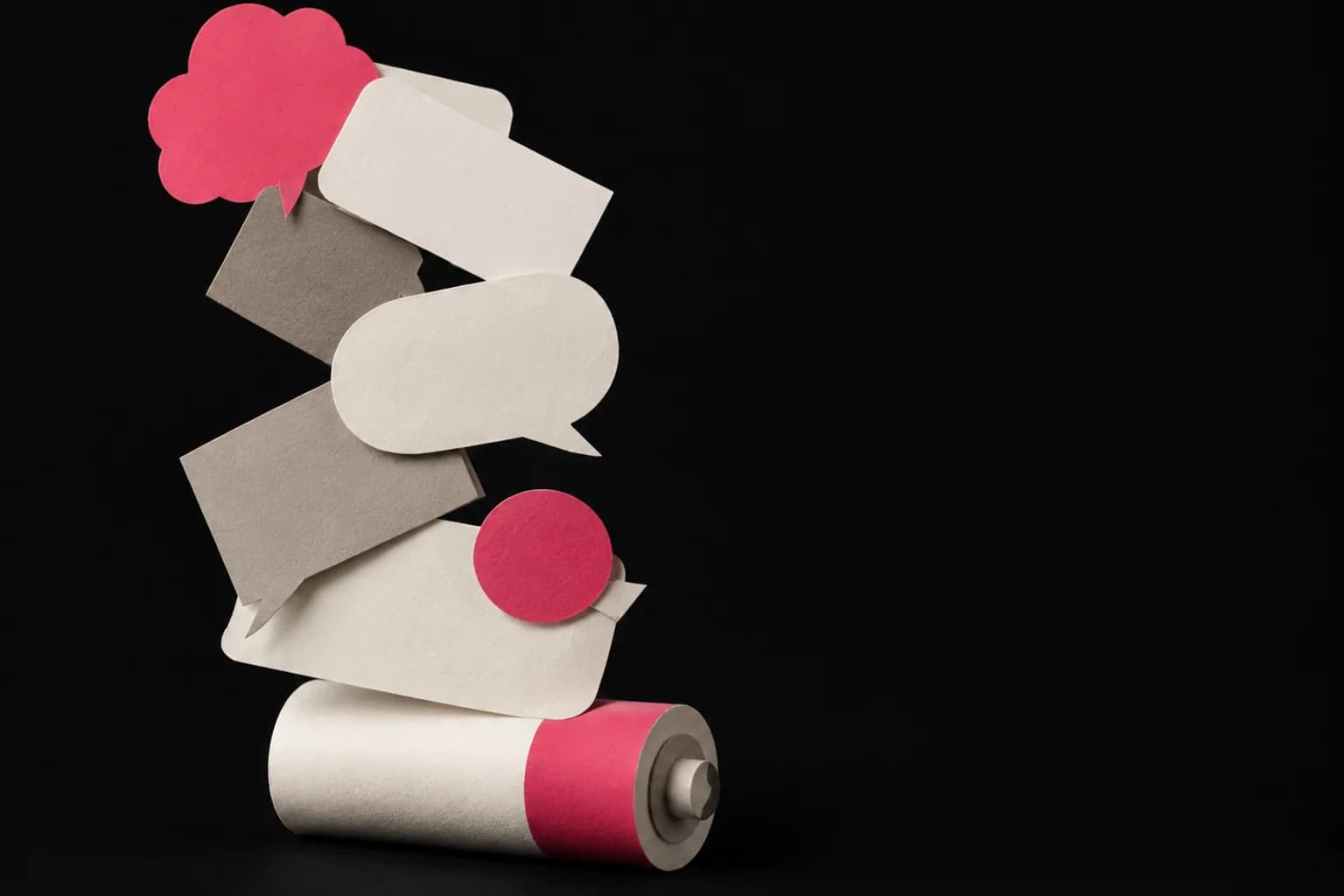
The phrase “social battery” is also a metaphor. Your phone shows a percentage; your need for rest doesn't arrive with that precision. You don't have to prove you are completely drained before you stop. “I've had enough conversation for now” is already useful information about what you want next.
Why can a tiny notification interrupt so much?
An APA research summary from 2015 describes Cary Stothart and colleagues' experiment in which notifications disrupted an attention-demanding task. That finding supports taking interruptions seriously. It doesn't establish that every message causes exhaustion or that switching off alerts will solve all tiredness.
Consider writing a food shopping list while three chats arrive. One asks for a travel date. Another refers to a disagreement from yesterday. A group wants a vote on a venue. Before you type anything, you have moved through several different contexts. The physical act of tapping the screen is only one part.
Try noticing how often you return to the same unfinished task. If alerts are the problem, a quiet period may be a more useful experiment than making every reply shorter. You can preserve an agreed way for urgent contacts to reach you while reducing the routine interruptions.
Why do unanswered chats feel like unfinished work?
An unanswered message can contain an actual task, such as confirming a booking. It can also contain a greeting with no deadline. If both look equally urgent in your inbox, you may keep mentally checking them. Calling that an “open loop” describes the unfinished feeling; it doesn't make every chat an obligation.
The NHS self-help CBT guidance suggests looking at connections between thoughts, feelings and actions. Here, inspect the rule you have attached to a notification. “A reply is due because I saw it” may be your assumption rather than an agreement with the sender.
Ask what would happen if you answered tomorrow. Perhaps the booking would close, which deserves attention. Perhaps someone would simply read your reply later. Distinguishing those outcomes can help you decide without judging the whole inbox as evidence that you are letting people down.
How can you sort twelve unanswered conversations?
Imagine four messages about a weekend plan, five friendly updates and three busy groups. You don't need twelve equally polished responses. Start with the plan: one clear answer may let the organiser book a time. Then decide which update you want to answer when you have space to enjoy it.
The groups may not need an individual response at all. You can read the agreed details and leave the running commentary for later. If a group has a real expectation, clarify it: “I'll check the final plan this evening. Please tag me if a decision needs my answer.”
This is an example of choosing by purpose, not a rule for sorting friends by importance. Tomorrow, a supportive conversation may matter more than a plan. The aim is to see what each message actually asks, rather than treating the unread number as a single task you must clear.
What can you try with your inbox today?
Choose one change you can maintain for a day. You don't need to announce a permanent new routine or reply to every old message before beginning. Start with the next decision you can make clearly, and let the experiment stay small enough to notice its effect.
- Find the real deadline. You could say: “I can confirm the time now; the longer answer will come later.” Separate a decision from a full conversation.
- Choose a checking window. Try: “Usually catch up with messages after dinner.” Pick a period that fits your actual day, without promising instant attention.
- Reduce optional alerts. Mute a busy group for the chosen period, keeping any agreed urgent contact route available.
- Close the exchange kindly. You could say: “Enjoyed catching up. I'm putting my phone away for the evening.” A conversation can finish while it still feels good.
- Review the change. Notice whether you enjoyed the replies more or felt less pulled between tasks. Keep the useful part and adjust what didn't fit.
Would a call or voice note be easier?
Sometimes writing a complicated explanation is the tiring part. You could ask: “Would a short voice note suit you, or would you prefer a text summary?” The other person may be somewhere they cannot listen privately. Making the choice together avoids moving the effort from your evening into theirs.
Use voice-note etiquette to keep the request manageable. For a back-and-forth decision, a scheduled brief call might suit both people. For information they need to revisit, a text could be easier. Our comparison of text, voice and video helps match the format to the task.
What if a slower reply makes someone feel ignored?
A short expectation can prevent guesswork, especially with someone used to your quick responses. You could say: “Trying to check messages less during the day. Happy to hear from you, and I'll answer when I have room.” This gives them context without promising a time you may be unable to keep.
If you share responsibilities, work out those details separately. A delayed answer about collecting a parcel may affect another person's day; a late response to a funny picture usually has different consequences. Ask which decisions need a deadline. Don't make every casual exchange carry the urgency of a practical arrangement.
You can acknowledge disappointment without giving up the limit. Try: “I know you were hoping to talk tonight. Tomorrow afternoon works better for me.” They can then decide whether that suits them. If someone demands constant availability, the issue is the expectation between you, not your ability to produce a better explanation.
Do you need a complete break?
A University of Bath study found short-term improvements after participants took a one-week break from several social-media platforms. It wasn't a study of private messaging, and it doesn't tell us that everyone needs to stop chatting. Use it as a reason to consider your habits, not a prescription.
You may only need a clear ending each evening. If you want a longer pause, the guide to planning a break from chatting helps you choose its length and keep useful contact available. If exhaustion persists beyond messaging or interferes with ordinary life, speak with a healthcare professional. You can also explore our wellbeing guides for support with the feelings around staying connected.
Questions people ask
- What does chat fatigue mean?
- It is an everyday description of feeling worn out by messaging. It is not a diagnosis, and the phrase does not explain every cause of tiredness.
- Why is texting tiring when it is supposed to be easy?
- Writing still asks you to pay attention, decide what to say and keep track of conversations. Frequent interruptions can add work even when each message is short.
- Is it rude to mute a group chat?
- You can limit notifications without rejecting the group. If people expect a quick answer for a shared plan, explain when you will check or agree on an urgent contact route.
- Should I use voice notes instead?
- They may suit some exchanges, but ask first. Listening can be inconvenient for the other person, so a different format should work for both of you.
Sources
- APA (2015). Research roundup: November 2015 · American Psychological Association
- University of Bath (2022). Social media break improves mental health – new study · University of Bath
- NHS (n.d.; accessed 2026). Self-help CBT techniques · NHS Every Mind Matters
Written by LustAI Editorial. We write plain-language guides about talking to people online, staying safe and feeling good about it. Every piece is researched against primary sources, edited by a human, and reviewed again whenever we update it.
Keep reading

Conversation skills
When should you send a voice note, and how long?
Ask before sending audio to someone new, keep the first note brief, and put essential details in text so they can reply comfortably.
5 min read

Feelings & wellbeing
When to take a break from chatting online
Try a short pause when chatting crowds out sleep, plans or enjoyment. Keep useful contact, choose a return time and see what changes.
5 min read
Meeting people online
Text, voice or video chat: which should you pick?
Choose a chat mode around your energy, language and space. Compare what each mode asks of you and use a simple script to switch.
6 min read